What Is Wagyu? Types, Taste, and What Makes It Special
 京都焼肉久成
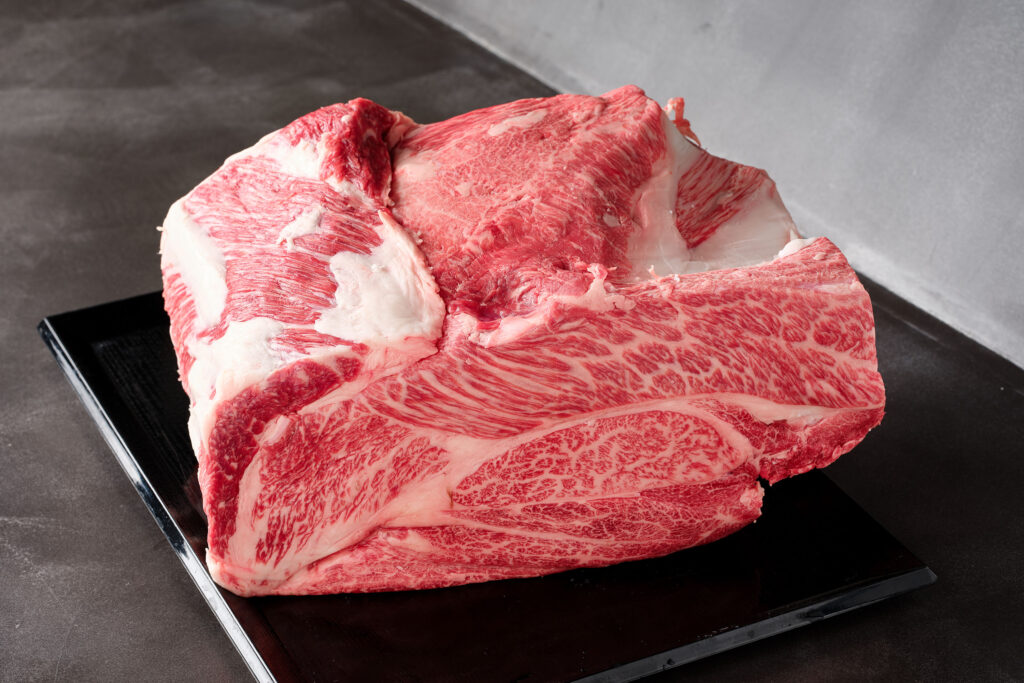
Have you ever wondered what makes Wagyu different from other beef, or why terms such as A5 and Kobe Beef appear so often? With different breeds, grades, and regional brands, it can be difficult to know what Wagyu actually means and what makes it distinctive.
In short, Wagyu is beef from four specific Japanese cattle breeds, and in Japan the name is reserved for cattle born and raised in the country. This article explains the four recognized breeds, Wagyu's characteristic marbling and flavor, why it can be expensive, and how A5 and Kobe Beef differ. It also introduces Matsunaga Wagyu and several popular ways to enjoy Wagyu in Japan, including yakiniku.
What Is Wagyu?
Wagyu literally means "Japanese cattle," but in Japan the term does not refer to every cow raised in the country. Wagyu comes from four recognized breeds: Japanese Black, Japanese Brown, Japanese Shorthorn, and Japanese Polled, as well as crosses between these breeds.
Breed alone is not enough, either. In Japan, beef can be labeled as Wagyu only when the animal belongs to these breeds and was born and raised in Japan. Each animal is registered under a 10-digit individual identification number, which makes it possible to trace its birth date, breed, and farm history.
The word "Wagyu" is also used for beef produced outside Japan, often from cattle with Japanese Wagyu bloodlines that have been bred and raised abroad, sometimes crossed with other breeds. Breeding backgrounds, production systems, and labeling standards differ from country to country, so "Wagyu" on a menu does not always mean beef produced in Japan.
Understanding this distinction makes it easier to interpret terms such as Japanese Wagyu, A5 Wagyu, and Kobe Beef when choosing beef at a restaurant or specialty shop.
The Four Wagyu Breeds
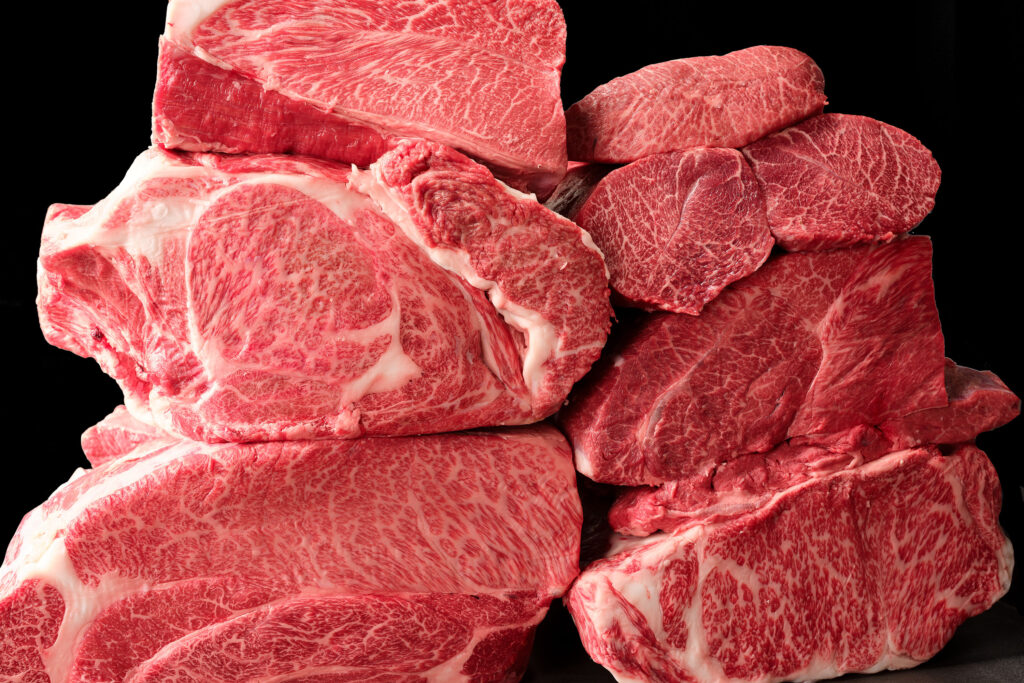
Wagyu is not a single cattle breed. Japan recognizes four Wagyu breeds, and each has different characteristics in terms of marbling, leanness, texture, and flavor. The table below gives an overview.
| Breed | Japanese Name | Main Regions | Characteristics |
| Japanese Black | Kuroge Washu | Throughout Japan | Fine, abundant marbling; the vast majority of Wagyu |
| Japanese Brown | Akage Washu (Akaushi) | Kumamoto, Kochi | More lean meat and a lighter fat profile |
| Japanese Shorthorn | Nihon Tankaku Washu | Tohoku region | Lean, with a mild and savory flavor |
| Japanese Polled | Mukaku Washu | Yamaguchi Prefecture | Rare; lean with a pronounced beef flavor |
Japanese Black
Japanese Black accounts for the vast majority of Wagyu raised in Japan. It is particularly known for its ability to develop fine intramuscular marbling, which is why it is the breed most commonly associated with premium Japanese Wagyu.
Most well-known regional Wagyu brands, including Kobe Beef, are based on Japanese Black cattle. When people picture Wagyu, they usually imagine the look of this breed: thin, finely distributed streaks of fat running through red meat.
Japanese Brown
Japanese Brown, also known as Akaushi, is raised mainly in Kumamoto and Kochi. Compared with Japanese Black, it generally has a higher proportion of lean meat and a lighter overall fat profile.
Its balance of lean meat and fat gives it a different character from the rich, highly marbled style often associated with Wagyu. For diners who prefer to taste more of the meat itself, it offers another side of Japanese beef.
Japanese Shorthorn
Japanese Shorthorn is raised mainly in the Tohoku region of northern Japan. It is leaner than Japanese Black and is known for a mild, savory flavor.
With less visible marbling, its appeal lies less in richness and more in the natural flavor of the red meat.
Japanese Polled
Japanese Polled is a rare breed historically associated with Yamaguchi Prefecture, and only a small number of cattle are raised today. It has a relatively high proportion of lean meat and a pronounced beef flavor.
Because so few are produced, it is seldom found outside the region where it is raised.
What Makes Wagyu Taste Special?
Wagyu is often associated with marbling, but the eating experience depends on more than appearance. Fat distribution, the nature of the fat itself, aroma, breed, cut, and cooking method all shape how the beef tastes.
Fine Intramuscular Marbling
Marbling refers to fat distributed within the muscle. Japanese Black Wagyu is particularly well known for developing fine and abundant marbling, which creates the distinctive appearance seen in premium Wagyu.
Marbling is one of the factors assessed when Japanese beef is graded, but it is not the only measure of quality. Color, firmness, texture, and the quality of the fat are also evaluated, and the cut and the way the meat is prepared influence the final eating experience as well.
Fat That Melts at a Low Temperature
Wagyu fat is often described as having a low melting point, and it is known to contain a high proportion of monounsaturated fatty acids such as oleic acid. Because the fat begins to soften at a relatively low temperature, it melts readily when cooked and eaten, which contributes to the smooth, melt-in-the-mouth texture Wagyu is known for.
Tenderness also depends on the structure of the muscle and connective tissue. Thinly sliced or carefully grilled Wagyu shows this texture most clearly, while overcooking can render out too much fat and make the meat less appealing.
Rich Aroma and Natural Sweetness
Japanese Black Wagyu is especially known for a distinctive aroma that is often described as sweet and rich. In Japan, this is sometimes called "wagyu-ko," or Wagyu aroma, and it is most noticeable when the beef is gently heated.
The balance between lean meat and fat affects how strong, light, or lingering the flavor feels, so not every type of Wagyu tastes the same. Leaner cuts and breeds offer a more pronounced beef flavor, while highly marbled cuts feel richer and sweeter.
Why Is Wagyu So Expensive?
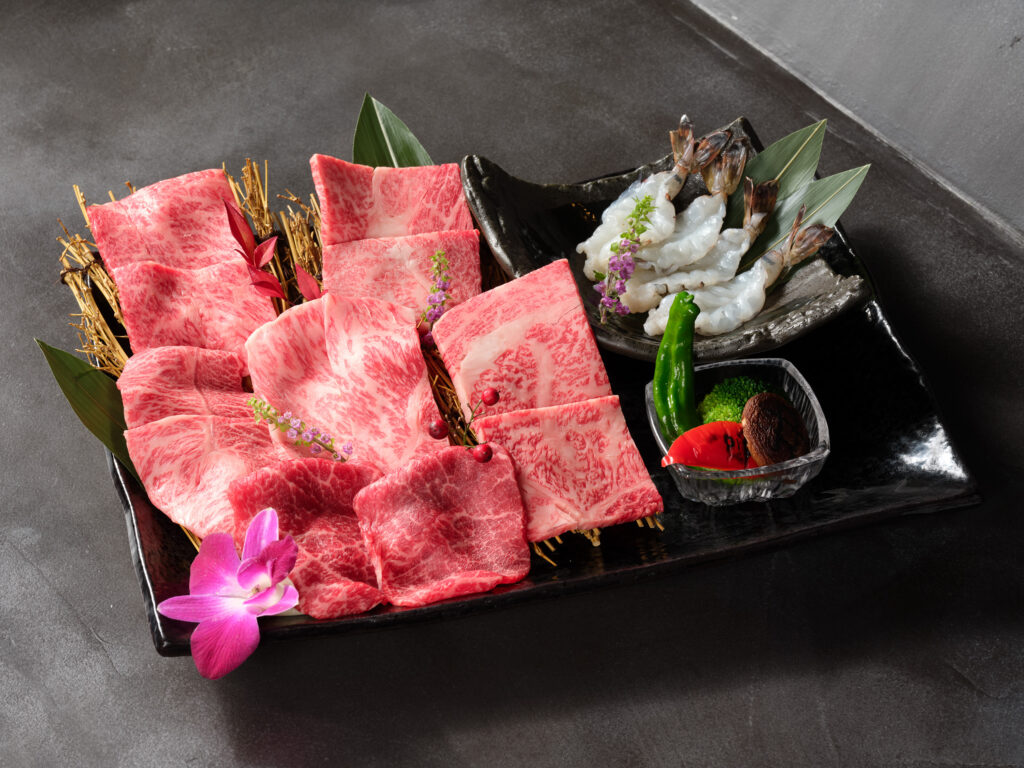
The price of Wagyu reflects both the production process and the limited supply of the finished beef. Premium Japanese Wagyu requires time, careful livestock management, and traceability, and some regional brands must also meet additional certification standards.
Long Fattening Periods
Premium Japanese Wagyu, particularly Japanese Black cattle, is raised over a relatively long fattening period, and many are shipped at around 28 to 30 months of age. The exact age differs by breed, producer, and regional brand.
A longer raising period means farms must provide feed, housing, labor, and daily care for more time. These ongoing costs are one reason premium Japanese Wagyu is more expensive than beef produced more quickly.
Specialized Feeding and Care
Producing Japanese Wagyu requires careful management throughout the animal's growth. Farmers monitor feeding, water, housing conditions, and animal health over time, and the specific approach differs from farm to farm.
You may have heard that Wagyu cattle are fed beer, massaged, or played classical music. Some individual farms have tried such methods, but they are not standard practice in Wagyu production. Consistent daily management, careful breeding, and accumulated farming experience matter far more.
Limited Production and Supply
Japanese Wagyu is produced within a system that includes recognized breeds, pedigree records, and individual traceability, so production is far more limited than that of beef supplied on a large global scale.
Certain regional brands apply additional standards related to origin, production area, and carcass quality, and only cattle that meet those requirements can be sold under the brand name. This limited supply is one reason highly graded beef and well-known regional brands command higher prices.
What Do A5 Wagyu and Kobe Beef Mean?
A5 and Kobe Beef are often mentioned together, but they describe different things. A5 is a carcass grading result, while Kobe Beef is a certified regional brand with its own requirements. Understanding the difference helps avoid treating the terms as interchangeable.
A5 Wagyu and the BMS
Japanese beef grading combines a yield grade with a meat quality grade. The yield grade is expressed as A, B, or C, while meat quality is graded from 1 to 5.
| Item | What It Indicates |
| Yield Grade | A, B, or C, based on the expected amount of usable meat from the carcass |
| Meat Quality Grade | 1 to 5, based on marbling, color, firmness, texture, and fat quality |
| BMS | Beef Marbling Standard, expressed from No. 1 to No. 12 |
A5 means yield grade A combined with meat quality grade 5, the highest combination in Japan's grading system. The Beef Marbling Standard, or BMS, is used to evaluate marbling as one element of the meat quality grade. For beef to reach grade 5, its marbling must score BMS No. 8 or higher.
This means A5 Wagyu itself covers a range of marbling levels, from BMS 8 to 12. A higher grade indicates more marbling, but it does not guarantee that every diner will find it the most delicious. Preferences for richness and leanness vary from person to person.
Kobe Beef as a Regional Wagyu Brand
Kobe Beef is not a separate Wagyu breed. It is a certified regional brand produced from Tajima cattle, a lineage of Japanese Black raised in Hyogo Prefecture, that meet standards established by the Kobe Beef Marketing & Distribution Promotion Association.
The requirements cover origin, production within Hyogo Prefecture, carcass grading, marbling, and weight. Only beef that satisfies all of the criteria may be sold as Kobe Beef.
In other words, Kobe Beef is Wagyu, but Wagyu is not automatically Kobe Beef. Many other regions of Japan have their own Wagyu brands with different production histories and standards.
About Matsunaga Wagyu
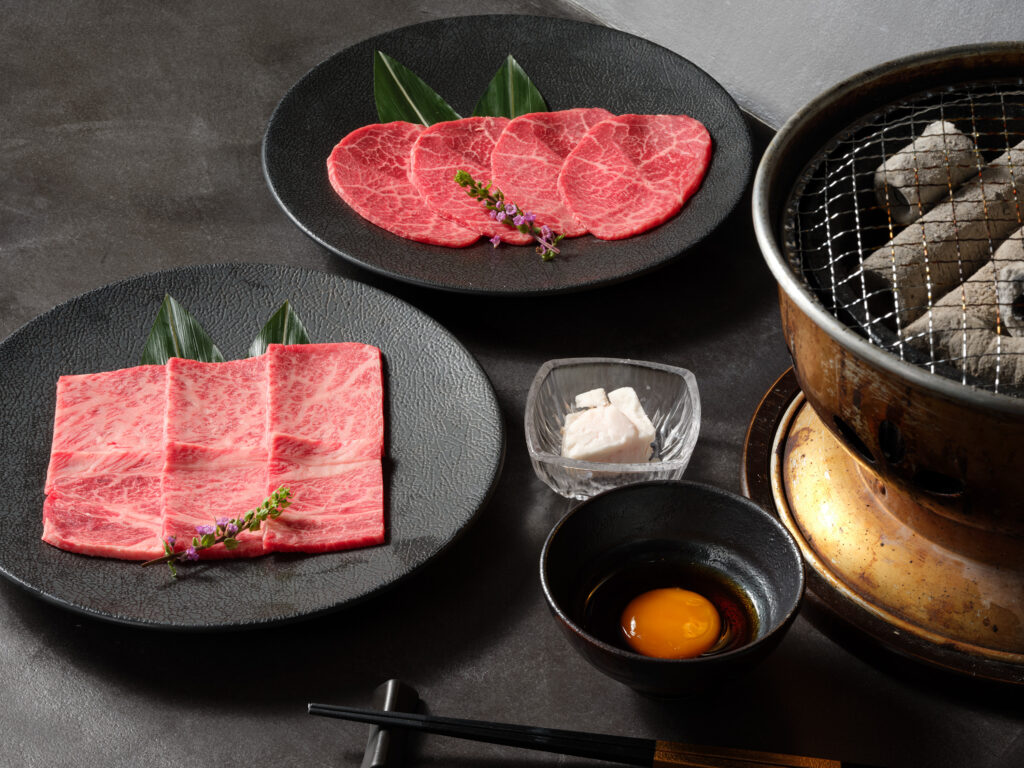
Matsunaga Wagyu is a Japanese Black Wagyu brand raised with close attention to bloodline and daily care. Its cattle are bred mainly from descendants of Dai 7 Itozakura, a renowned sire that made a major contribution to Wagyu breeding in Japan in the late 1970s and 1980s.
The farm carries out health checks every day and raises its cattle in a spacious, calm environment. Matsunaga Wagyu is known for its balance of lean meat and marbling, combining delicate sweetness with deep umami.
The brand has also received national recognition, including the following awards.
- 2008: Prime Minister's Award
- 2020: Honorary Award at the National Beef Carcass Competition (Zenkoku Kyoreikai)
- 2022: Honorary Award at the National Beef Carcass Competition (Zenkoku Kyoreikai)
- 2023: Honorary Award at the National Beef Carcass Competition (Zenkoku Kyoreikai)
At Kujyo, we serve only A5 Matsunaga Wagyu with a BMS of 10 or higher, the upper end of the A5 range.
Ways to Enjoy Wagyu in Japan
Wagyu can be prepared in several ways, and each style highlights different qualities of the meat. Thickness, cooking temperature, and accompanying ingredients all affect how the fat melts and how clearly the flavor of the beef comes through.
Wagyu Steak
Steak is one of the most direct ways to enjoy the aroma, tenderness, and flavor of Wagyu. A thicker cut allows the surface to brown while the inside cooks more gently.
Because highly marbled Wagyu is rich, a small portion is often enough to be satisfying. Steak also makes it easy to compare leaner cuts, such as chateaubriand, with more marbled cuts, such as sirloin.
Sukiyaki and Shabu-Shabu
Sukiyaki and shabu-shabu use thinly sliced beef, which cooks quickly and keeps a soft texture.
In sukiyaki, beef is cooked with vegetables and other ingredients in a sweet and savory sauce, and is traditionally dipped in raw beaten egg before eating. Shabu-shabu takes a lighter approach: thin slices of beef are swished briefly through hot broth and then eaten with dipping sauces, making it easy to enjoy the texture and aroma of the meat.
Yakiniku
Yakiniku is a popular dining style in Japan in which bite-sized pieces of meat are grilled at the table. Different cuts can be cooked one at a time, making it easy to compare their texture, fat content, and flavor.
Leaner and more marbled cuts benefit from different amounts of heat, so grilling each piece individually lets you bring out its best qualities. At Kujyo in Gion, Kyoto, we serve Matsunaga Wagyu as yakiniku, sukiyaki, and steak, so guests can enjoy the differences between cuts in a single meal.
Frequently Asked Questions About Wagyu
Here is a summary of the most frequently asked questions about Wagyu beef.
Is Wagyu the same as Kobe Beef?
No. Wagyu refers to beef from four Japanese cattle breeds born and raised in Japan, while Kobe Beef is a certified regional brand produced from Tajima cattle in Hyogo Prefecture. All Kobe Beef is Wagyu, but most Wagyu is not Kobe Beef.
Is American or Australian Wagyu the same as Japanese Wagyu?
Not necessarily. Wagyu produced outside Japan often comes from cattle with Japanese Wagyu bloodlines that have been raised abroad, and many are crossed with other breeds. Breeding, feeding, and grading standards differ by country, so the eating experience may differ from that of Japanese Wagyu.
What does A5 mean?
A5 is the highest grade in Japan's beef grading system. "A" is the yield grade, showing the expected amount of usable meat, and "5" is the meat quality grade, based on marbling, color, firmness, texture, and fat quality. A5 beef has a BMS marbling score of 8 or higher.
How can I tell if Wagyu is authentic Japanese Wagyu?
Japanese Wagyu is registered under a 10-digit individual identification number that records the animal's birth, breed, and farm history. When buying or ordering Wagyu, you can ask the shop or restaurant about the origin, grade, and brand of the beef.
Why does Wagyu melt in your mouth?
Wagyu fat has a relatively low melting point and is rich in monounsaturated fatty acids such as oleic acid, so it softens readily when cooked and eaten. Combined with fine marbling, this gives highly marbled Wagyu its smooth texture.
Summary | Experience Matsunaga Wagyu in Kyoto
Wagyu refers to four Japanese cattle breeds born and raised in Japan, each with its own balance of marbling, leanness, texture, and flavor. Japanese Black is especially known for fine marbling, while the other breeds offer leaner meat and distinct flavor characteristics.
A5 and BMS relate to Japan's beef grading system, while Kobe Beef is a certified regional brand, so the terms should not be used interchangeably. Wagyu can be enjoyed in many ways, including steak, sukiyaki, shabu-shabu, and yakiniku.
At Kujyo, a three-minute walk from Gion-Shijo Station in Kyoto, we serve A5 Matsunaga Wagyu with a BMS of 10 or higher as yakiniku, sukiyaki, and steak. If you would like to experience authentic Japanese Wagyu during your visit to Kyoto, you can reserve your table online.
\ 最新情報をチェック /